

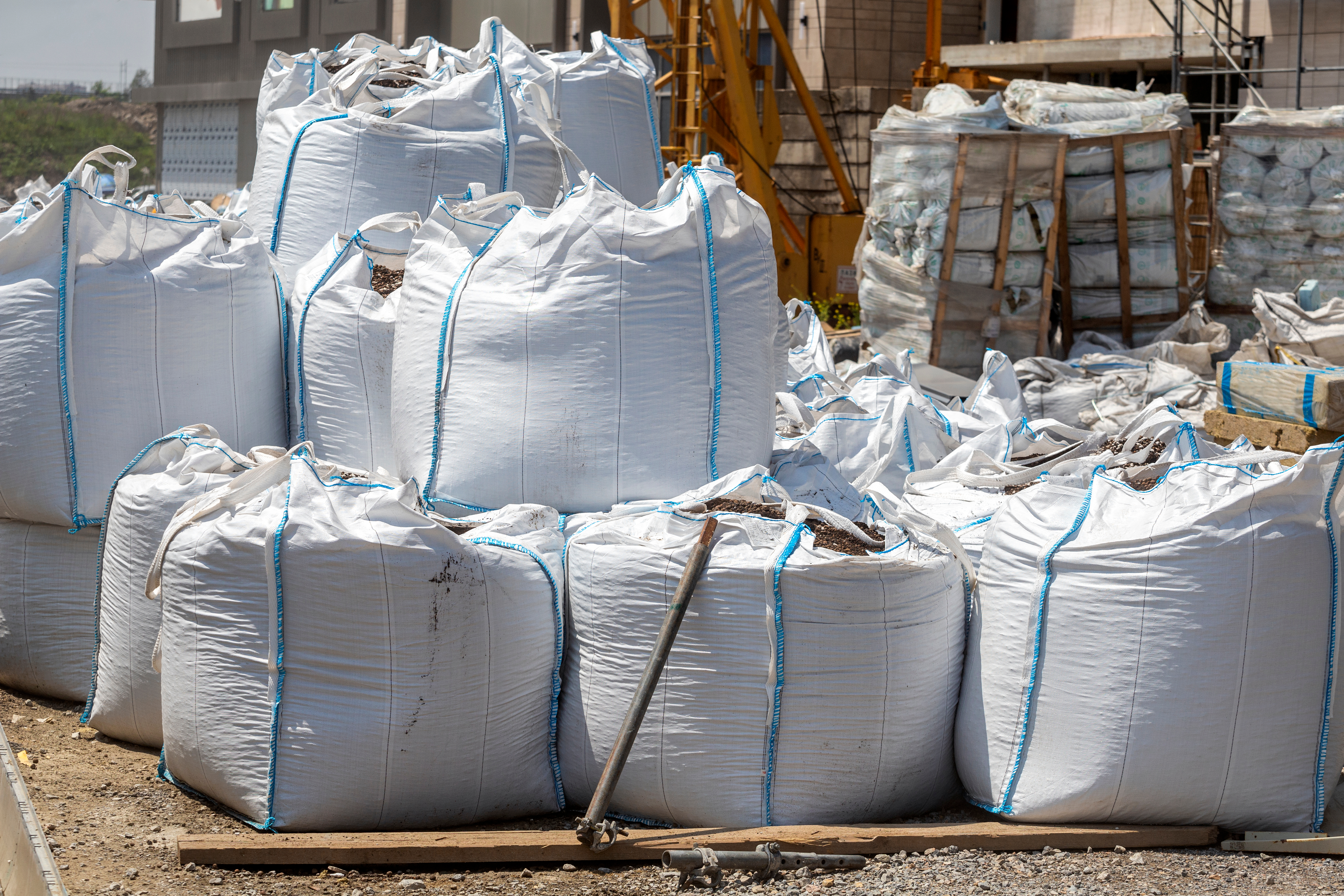
Bulk bags are specified and used every day across hundreds of UK supply chains, often by teams who know exactly what they need the bag to do, but don’t always have time to decode what the markings and ratios really mean. Safety factor ratings and reuse classifications aren’t marketing terms. They are performance limits that directly affect handling practice, inspection requirements, and your legal liability if something goes wrong. Read on as we discuss the implications of safety factors and reuse ratings for your choice of bulk bag packaging.

What Are Safety Factors And What Do They Represent?
Safety factors are expressed as ratios; most commonly 5:1, 6:1, or 8:1, and relate directly to a bag’s Safe Working Load (SWL). Essentially, a 1,000kg SWL bag with a 5:1 safety factor has been tested to fail at five times its rated load under controlled conditions. However (a very big however), this does not mean the bulk bags can safely carry more than their stated SWL. Just because a 1k kg bag is tested to 5,000 kg, it doesn’t mean you can load it with 4,000 kg without creating a severe safety hazard. The safety factor exists to account for variability: dynamic loading, handling shocks, uneven filling, and environmental influences.
The higher the safety factor ratio, the greater the margin between normal use and structural failure. This margin becomes especially important when bags are reused, stored outdoors, or subjected to repeated handling cycles.
However, while bulk bags are rated to a specific SWL, best practice rarely involves filling them to that absolute maximum. In most applications, filling to no more than approximately three-quarters capacity provides a safer and more stable load – so around 750 kg in the case of our 1,000kg SWL bag.
Single-Use And Multi-Use Certifications
A critical distinction within the types of bulk bag is whether a bag is certified for single use or multiple use. Bags with a 5:1 safety factor are single-use only. Once filled, lifted, discharged, and emptied, they must not be reused. This is because the fibres, stitching, and lifting points are not designed to withstand repeated stress cycles, even if the bag appears structurally sound.
Multi-use bags, typically rated at 6:1 or 8:1, are designed and tested differently. These bags use:
- Higher-grade fabric
- Reinforced seams and lifting loops
- Stricter manufacturing tolerances
They also undergo a more demanding testing regime to demonstrate that they can safely withstand repeated loading and unloading cycles when used correctly.
Reusing a single-use bag fundamentally changes your risk profile and voids the safety margin the bag was designed around. The same applies to using a bag outside its certified use, whether by overfilling or ignoring the requirements for design, testing, and performance under ISO 21898:2024. This can invalidate compliance and expose your business to significant financial, legal, and reputational risks if a failure occurs.
Inspection Requirements Before Reuse
For multi-use bulk bag packaging, inspection is an essential prerequisite for reuse, confirming that the bag still conforms to the assumptions under which its safety factor was certified. Multi-use ratings rely on the integrity of various defined load paths: from the fabric body, through the stitched seams, and into the lifting loops, so any damage that alters how the load is distributed through these paths could invalidate the original certification.
Rather than surface appearance, your inspections should therefore focus on:
- Lifting loop geometry, checking for elongation or distortion that indicates plastic deformation rather than just surface wear.
- Stitch tension consistency, particularly where the loops join the bag body, as uneven tension suggests internal load redistribution.
- Seam alignment, verifying that the panels have not shifted in a way that concentrates stress at vulnerable points.
- Fabric continuity at high-stress zones, rather than general surface condition
Crucially, a bag can look serviceable while still failing these criteria. Changes in load behaviour are often structural, not cosmetic. If inspection cannot confidently confirm that the original load paths are still intact, the bag should be removed from service regardless of its apparent condition.
What Next?
Choosing the right types of bulk bag for your application is important because most bulk bag failures are caused not by defective products, but by bags being used beyond what they were designed and certified to do. For more information and to discuss the best bulk bags packaging solutions for your application, please contact the team at Cliffe today by calling 01782 493282, or click here to send us a message.

Image Source: Envato